Echocardiogram (Echo) *
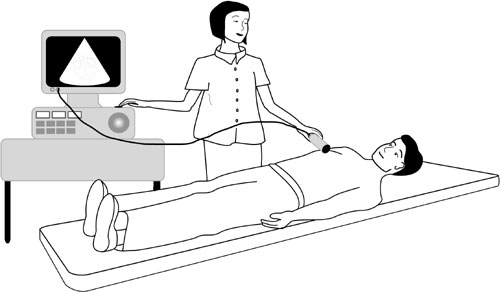
This test uses ultrasound waves to look at the structure of the heart. It is useful for people whose ECG shows changes that could be caused either by a channelopathy or by uninherited heart disease that has damaged the heart – for example, a previous heart attack that you may not have even been aware […]
ECG (electrocardiogram) *
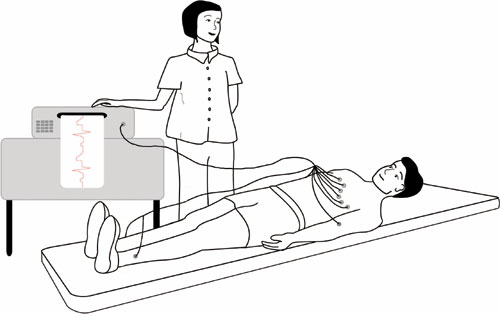
The ECG is the most basic cardiac test. The ECG involves taping electrical leads onto your legs, arms and chest to take readings of the electrical activity of your heart. These are printed out onto a piece of paper for the doctor to examine. If the first ECG does not show any sign of a […]
Medical examination
A medical examination may help to discover if there is an inheritable structural heart disease in the family. For example, if there is mitral valve prolapse with leakage from the valve this will cause a ‘murmur’ that a doctor can hear through a stethoscope. Your doctor may suggest that you have some of the tests […]
Medical history
It is vital that a clear medical history of the victim and his or her death is established, using the family’s and friends’ recollections as well as the reports of the coroner, pathologist, GP and police. For example, fits brought on by exercise can be due to an underlying channelopathy such as LQTS or CPVT, or a sudden […]
How the heart functions
How the heart functions, and how it can cause sudden death In order to understand why sudden death can happen, it helps to understand how the heart functions. The heart is a specialised muscle and organ that contracts regularly and continuously, pumping blood to the body and the lungs. The pumping action of the heart […]