Genetic testing
Genetic Testing Genetic testing is used because, in most of the inherited conditions known to cause SADS, mutations of specific genes have been detected and are thought to cause a specific disease. So in principle, if we could identify these mutations, we would be able to make a diagnosis in any DNA sample including any […]
Tilt-table testing
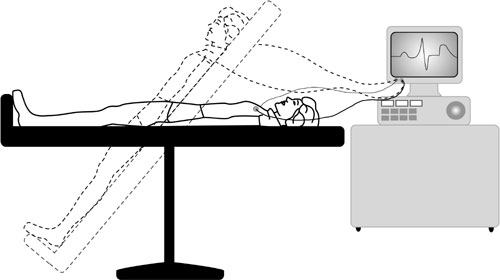
Tilt-table testing is used to identify other common conditions that can cause blackouts – such as Vasovagal Syndrome (see technical terms) or simple fainting – that tend to particularly affect young women and girls but have a very low risk of causing sudden death. These symptoms are very similar to the symptoms of more rare […]
Coronary angiography and electrophysiological study (EPS)
Depending on the results of the previous tests, your doctor may suggest that you have other tests such as coronary angiography or an electrophysiological study (EPS). Both these tests are performed in an X-ray laboratory that allows the body and any medical tools (such as cardiac catheter tubes or pacing wires) to be seen using […]
Cardiac Magnetic Resonance CMR scan *
A CMR scan is a special kind of scan used to examine the structure of the heart and the nature of its muscle. It uses a Magnetic Resonance scanner that creates intense fluctuating magnetic fields around your body while you are inside the scanner. How a CMR scan works This generates the signals that make […]
Provocation tests (Ajmaline, flecainide and adenosine tests)
You may be asked to have provocation tests if your doctor suspects Brugada Syndrome. While you are having an ECG test you will be given an injection of ajmaline or flecainide (antiarrhythmic drugs). The test may show changes on the ECG that are typical of one of the channelopathies. A fine plastic tube is inserted […]
Reveal device
When it is difficult to assess or record a symptom because it only happens infrequently – as with blackouts – a Reveal device can be used. The device, which is the size of a packet of chewing gum, is placed under the skin at the left shoulder. Fitting a reveal device You will need to […]
Cardiomemo and event recorder *
Cardiomemo and event recorders are more sophisticated versions of the basic Holter monitor. Whenever you have an attack of symptoms, you can activate the device to record your heart’s rhythm. (You can also do this with the digital Holter.) The advantage of the cardiomemo is that it doesn’t have any leads, so you can just […]
Holter Monitor*
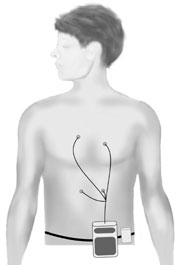
The Holter is a recording device that comes in two different forms: a small portable tape recorder (like a walkman), or a small digital device the shape of a pager. You wear the device on a belt round your waist. Four or six ECG leads from the device are taped to your chest. The device […]
Cardiopulmonary exercise test
Some hospitals may also ask you to do a cardiopulmonary exercise test. This test analyses the efficiency of the heart muscle by measuring the amounts of oxygen your body uses during exercise. You will be asked to breathe into special equipment while you are exercising (like the exercise test). If the efficiency of your heart […]
Exercise test *
(Also called an Exercise ECG.)This test is the same as the ECG but is recorded before, during and after a period of time spent exercising on a treadmill or an exercise bike. This allows the doctor to examine any changes in the electrical patterns that occur with exercise, and analyse any abnormalities. This test is […]